Solutions
Platform
Customers
Resources
Solutions
Platform
Resources

Chasing the latest influencer trend might get you likes, but it will not build a business. The industry’s real winners have already moved past FOMO as a strategy. They understand that budgets spent on trend-chasing are marketing taxes paid by brands without a system. The Cirqle didn’t jump on a creator wave - we architected the Creator Performance Era because we saw an uncompromising truth: scalable results require first-party data.
First-party creator data is the foundation of sustainable influencer ROI. Forget vague metrics, unreliable awareness lifts, and the black box of platform-reported “engagement.” No real growth organization survives on vanity metrics. The brands who dominate this space are those who own their performance data across every creator collaboration - clicks, conversions, downstream LTV, AOV; mapped back to the source at a granular level. This data doesn’t just inform one-off decisions. It compounds, turning every campaign into fuel for sharper targeting, more precise messaging, and smarter creator selection.
Here’s what most brands miss: true creator performance isn’t a lottery ticket. It’s an operational asset. When you own your influencer data, every campaign gets smarter. Audiences, verticals, creative mechanics, and offer structures - these become variables you can rigorously test and optimize, not roll the dice on. The Cirqle’s clients are not guessing if their next partnership will deliver. They’re systematizing everything: payout models tied to exact outcomes, always-on learning loops, and continually evolving playbooks fed by clean, reliable, first-party data.
This is the shift that most brands are too slow to make. When you treat influencer marketing like paid search or direct response (where data drives every decision) you gain an edge that isn’t replicable by brands blinded by hype or inertia. Welcome to the Creator Performance Era. Here, the only scalable advantage is leveraging your own data to drive predictable, repeatable, and exponential influencer ROI.
First-party data gives brands a powerful, sustainable edge in influencer marketing that third-party signals simply can't match. Here’s why it drives superior performance: - Own the direct relationship between creators, audiences, and purchase behavior for unique, actionable insights. - Track granular event-level data to identify which creators drive actual intent and sales. - Segment and target high-value customer cohorts with precision, eliminating guesswork in influencer reach. - Brief creators to address niche audiences with tailored messaging, offers, and creative formats. - Rapidly optimize campaigns by analyzing real-time conversion and engagement data, making improvements within days. - Attain airtight attribution and accurate incrementality analysis, surpassing unreliable platform-reported results. - Achieve measurable uplifts in key metrics like ROAS and CPA by leveraging data-driven influencer programs. Bottom line: mastering first-party creator and customer data delivers a compounding advantage, transforming influencer marketing into a scalable revenue engine.
Many influencer programs falter when scaling because brands overlook the critical role of first-party data. Here’s why this leads to stagnation and wasted potential: - Neglect essential data, forcing brands into a cycle of repeated testing and basic relearning. - Fail to develop institutional knowledge, leading to poor targeting and creative decisions. - Allow content fatigue to set in due to repetitive briefs and overlapping audience exposures. - Rely on incomplete dashboards and static metrics, making optimization guesswork rather than strategy. - Miss opportunities for cumulative learning lifts ROAS, causing every campaign to start from scratch without improving efficiency. - Settle for surface-level metrics from tools, losing sight of the true drivers of conversions and revenue. - Operate without a unified data system, resulting in isolated efforts that can’t scale or adapt alongside industry leaders.
Brands that treat influencer marketing like a one-shot campaign have already lost. The real competitive advantage: architecting a compounding engine for growth, using first-party data at every stage. Here is the actionable blueprint DTC leaders need. Activate: Ditch the vanity metrics and lazy creator lists. Start your flywheel by choosing creators based on proven, owned performance data and precise audience insights. Build your recruitment around conversion histories, not just superficial reach. If a micro-influencer consistently drives checkouts for your vertical, favor them over a celebrity who brings followers but little action. Use pixel-based enrichment, CRM overlays, and internal sales data to prioritize those with aligned, high-intent audiences. Prioritize conversion-driving micro-influencers. What most brands get wrong: they match creators to brand aesthetic, not to their buyers’ behavior. Capture: Every influencer activation must double as a data-capture operation. Roll out unique links, custom discount codes, shoppable landing pages, and first-party tracking pixels tied to each creator and campaign. Don’t just stop at last-click attribution - capture add-to-carts, content shares, and even dwell time where possible. This direct conversion and engagement data is gold. Most brands stay dependent on platform-reported metrics (which are high-noise), missing the real user-level signals essential for future targeting. Analyze: Feed all captured data into a unified dashboard, not a spreadsheet graveyard. Automate cohort-level performance analysis so you can identify which creators, content formats, and audience seg segments overdeliver relative to benchmarks ("insert benchmark here"). Look for lift beyond expected norms. The best operators don’t just analyze aggregate performance - they break down creator clusters by product SKU, platform, and audience layer, so every dollar in can be attributed with clarity. Iterate: Here’s where 99 percent of brands stall. Instead, use your own data to retarget high-intent audiences, re-segment creator cohorts, and double down on proven hooks. Uplift your performance by remixing and amplifying the content that converts - and retire what doesn’t. Feed learnings back into creator selection and briefings for the next cycle, making every round incrementally smarter. Effectively, your influencer strategy should advance with the same sophistication as your paid social or retention programs. Scale: Now comes the multiplier effect. Take your best-performing creator content, cross-validated by first-party signals, and build lookalike segments for paid campaigns. Launch creator-licensed ads targeting identical audiences across platforms. The influence loop sharpens: every promotion, share, or conversion captured makes your next campaign even more targeted and capital-efficient. This is how The Cirqle’s clients consistently outperform benchmarks and break the plateau most brands hit after their first influencer push. Architected correctly, this flywheel is self-reinforcing: your first-party data doesn’t just power today’s campaign, it strengthens every future move - unlocking compounding efficiency no rented database or platform dashboard can match.
| Stage | Traditional Approach | Data-Driven Flywheel |
|---|---|---|
| Activate | Select based on follower count & brand fit | Select using conversion and audience data |
| Capture | Rely on platform-reported metrics | Implement first-party tracking and capture granular user signals |
| Analyze | Look at aggregate, campaign-level summaries | Automate cohort and creator-level performance analysis |
| Iterate | Repeat what “seems” to work, minimal refinement | Optimize creator selection, content, and targeting based on actual results |
| Scale | Plateau after initial push | Use best data to amplify or replicate top-performing segments |
Here’s the blind spot: most brands light their paid budgets on fire by amplifying creator content without the guardrails of performance data. The default playbook is to take top-performing organic posts (often based on vanity metrics) and dump spend behind them, praying for a repeat hit. This “spray and pray” approach leaves most brands with suboptimal results, creative fatigue, and wasted capital. The true outliers don’t amplify content on a hunch. They put performance data at the center, using continuous first-party feedback to decide which creator assets deserve paid firepower. The Cirqle was built for this shift. Our platform captures every conversion, CPM, CTR, ROAS, and incremental lift at the first-party level, not just at the surface. That means you’re never forced to guess which asset is driving last-click or view-through impact; you know, and you scale accordingly. What most brands get wrong is believing “whitelisting” is an automatic unlock. Without real-time, closed-loop data, all you’re doing is boosting for branding and reach. That may inflate impressions, but it rarely compounds into new revenue or customer acquisition at scale. You should be treating influencer amplification like programmatic media buying: ruthless A/B testing, constant iteration, and hard optimizations grounded in attributed conversions - not engagement rate or follower counts. Here's the payoff: when you let continuous first-party data dictate which creator ads get scaled, amplified influencer content can drastically outperform brand-owned ads on core metrics like ROAS and new customer acquisition. Brands switching from “intuition-based” to “data-driven” creator amplification have historically seen a 20-40% improvement in paid social ROI. Performance-driven amplification is the only defensible way forward. It ensures every dollar you put behind creator content is justified, creative fatigue is minimized, and your team is building a compounding growth engine - not just padding your vanity metrics. Drop the old playbook and let the numbers lead; it’s the only way to win at scale.
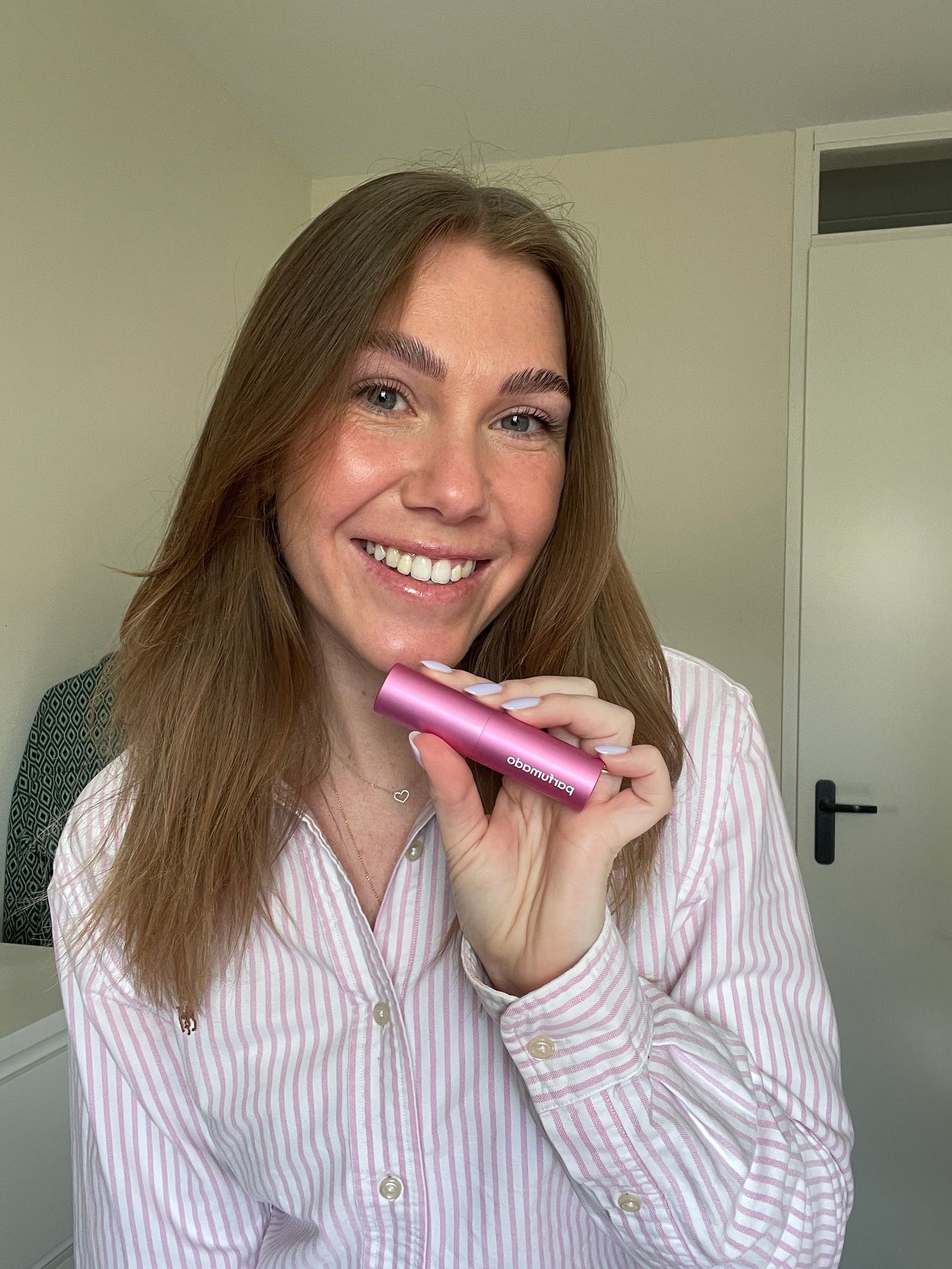
Case in point. Parfumado used The Cirqle’s Influencer Marketing Platform to stitch customer acquisition cost tightly to actual results, not vanity metrics. By funneling live campaign data directly into their influencer mix, they executed rapid-fire creative and budget reallocations, immediately rooting out underperformers and doubling down on what delivered. Within a single month, Parfumado slashed CPA by 20 percent in 30 days while scaling paid partnership reach to 560,000 impressions and 2,000 high-intent clicks. This is what operational rigor looks like - lean-in, data-led influencer campaigns that cut acquisition cost and compound channel efficiency from day one.
Case in point. LYMA Life cut through beauty market noise by pairing The Cirqle’s data-driven influencer model with hyper-targeted creative. Instead of chasing vanity reach, the team stitched first-party purchase signals directly into campaign optimization. Every influencer, message, and spend decision was filtered through live checkout data to ensure every click had conversion potential. The result: a 6.84 ROAS, over 4.8 million impressions, and 103,000 high-intent clicks - not just attention, but acquisition at scale. With this closed-loop approach, LYMA captured new buyers and credible brand lift in one focused motion.

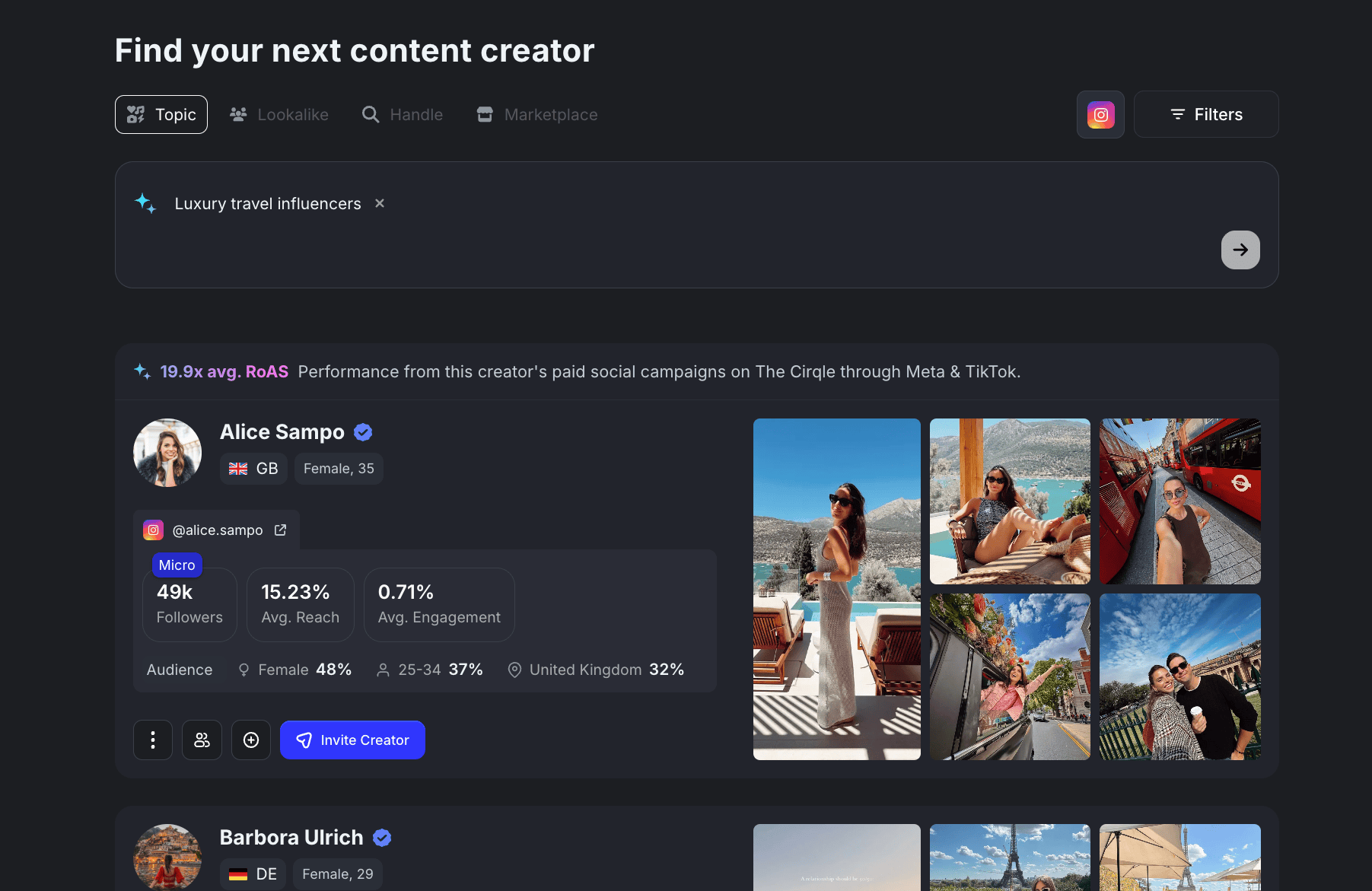
With The Cirqle’s AI Creator Search, performance marketers can instantly surface creators who align with your best customers by leveraging detailed first-party data and historical RoAS metrics. This eliminates guesswork, letting you filter, analyze, and engage the right creators in a single workflow. See how to streamline your influencer targeting and learn how it works.
Most brands still treat influencer marketing as a guessing game - flying blind on creative, obsessed with follower count, and measuring impact in likes. The Cirqle’s partners take the opposite tack: they weaponize first-party data to systematically drive scale, efficiency, and repeat sales. Here’s what that looks like in the real world.
A global beauty DTC brand partnered with The Cirqle to cut through the saturated skincare market. Instead of defaulting to broad awareness campaigns, they integrated first-party checkout and pixel data into influencer targeting and creative iteration. This meant every campaign touchpoint (right down to the creative themes pushed to each micro-audience) was informed by conversion data, not “influencer vibes.” The result: campaign optimization became a closed-loop system. The team increased campaign ROAS by over [insert benchmark here] within two months and saw a 20 percent uptick in repurchase rates traced directly back to influencer-powered first-party captures. The playbook was simple but radical: rapid creative testing based on live funnel data, auto-allocating spend to creators and content driving not just clicks but purchases, and immediately recycling winner segments for retargeting.
A premium natural food subscription service faced the classic paid social plateau. Their breakthrough came when they used The Cirqle to overlay creator audience data with their own customer LTV metrics, pinpointing not just new customers but high-value, returning subscribers. Rather than spray-and-pray seeding, the brand built creator “lookalike” lists optimized for repurchase propensity. Over the next quarter, their blended CAC dropped by 28 percent, and the influencer channel overtook paid search as the top source of new subscribers. The lesson: rich first-party insights allowed them to discipline their campaign budget, reduce waste, and ruthlessly double down on creators that actually delivered scale.
The common thread isn’t industry - it’s operational discipline. Whether it’s beauty, fashion, or food, the brands extracting the most value from influencers systematize the loop between influencer engagement and real customer data. For DTC and ecommerce marketers, the roadmap is clear: the winning edge goes to those who treat first-party data as the source code for their entire creator strategy, not just an analytics afterthought.
First-party data is the only currency with compounding value in influencer marketing. Brands that prioritize it today will control the narrative, targeting, and outcomes in a world where privacy regulations and social algorithms increasingly lock down external signals. If you’re still relying primarily on platform-reported reach or spray-and-pray tactics, you’re ceding both intelligence and revenue to savvier competitors.
Begin with a ruthless audit of your influencer data pipeline. Map every touchpoint (from creator onboarding and content briefing to campaign wrap reports) then flag where data escapes or gets siloed in Excel files, disparate platforms, or third-party dashboards. Most brands discover that their influencer data lives everywhere except where it’s actionable, causing waste, latency, and lost insights.
Integration is your next power move. Adopt a unified platform like The Cirqle to ingest, aggregate, and normalize creator, campaign, and performance data. The goal is zero copy-paste friction: you want every creator’s historical ROAS, content resonance, compliance, and conversion data available in real time for any new brief. Centralization enables both scale and precision - two traits rarely found together in influencer programs.
Every campaign decision must be tied to real, first-party, directly attributable results. Impression counts and vanity engagement are legacy metrics. Instead, build your program around tracked clicks, signups, COGS-adjusted revenue, LTV, and new customer acquisition - all driven by pixel, coupon, or direct platform integration. When your attribution is tight, your budget allocation moves from guesswork to a growth engine.
Systematically document and codify every learning. Develop a living playbook: which types of creators generate not just reach, but reliable conversion; which content formats fuel repurchase; which audience intersections drive down CPA across paid and organic. This isn’t optional. Over time, your brand’s proprietary creator performance graph (built off structured first-party data) is an asset no competitor or agency can replicate.
The brands winning the next evolution of influencer marketing will be those with high-velocity learning loops and infrastructure to leverage every data point instantly. Move now, before the market catches up. Your future ROI (and access to the best creators) depends on it.
Give your team the power and speed they need to find the right partners and grow your brand.
%201.avif)